

James Payne: Salford’s Last Lamplighter
The man who carried the city from oil to electricity

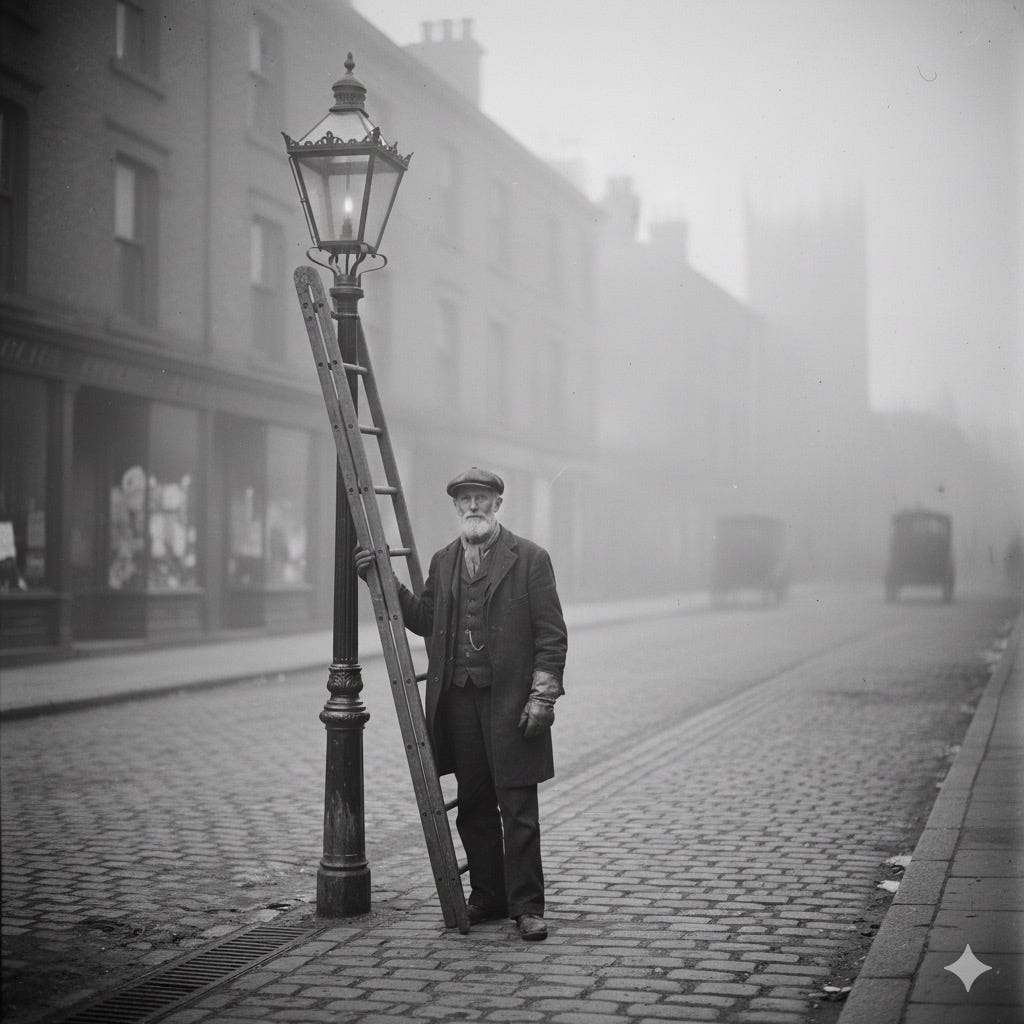
AI re-imagining of James Payne on Chapel Street, c.1885 — created in an authentic late-Victorian photographic style to show how Salford’s last lamplighter might have looked on his nightly rounds.
James Payne (1823–1907) is one of the quiet heroes of Salford’s history — a working man whose 64-year career as a lamplighter covered every phase of the city’s transformation, from smoky oil lamps to gas, to incandescent mantles, and finally to electricity itself. His life is, quite literally, a biography of modern light.
The Street That Lit the World
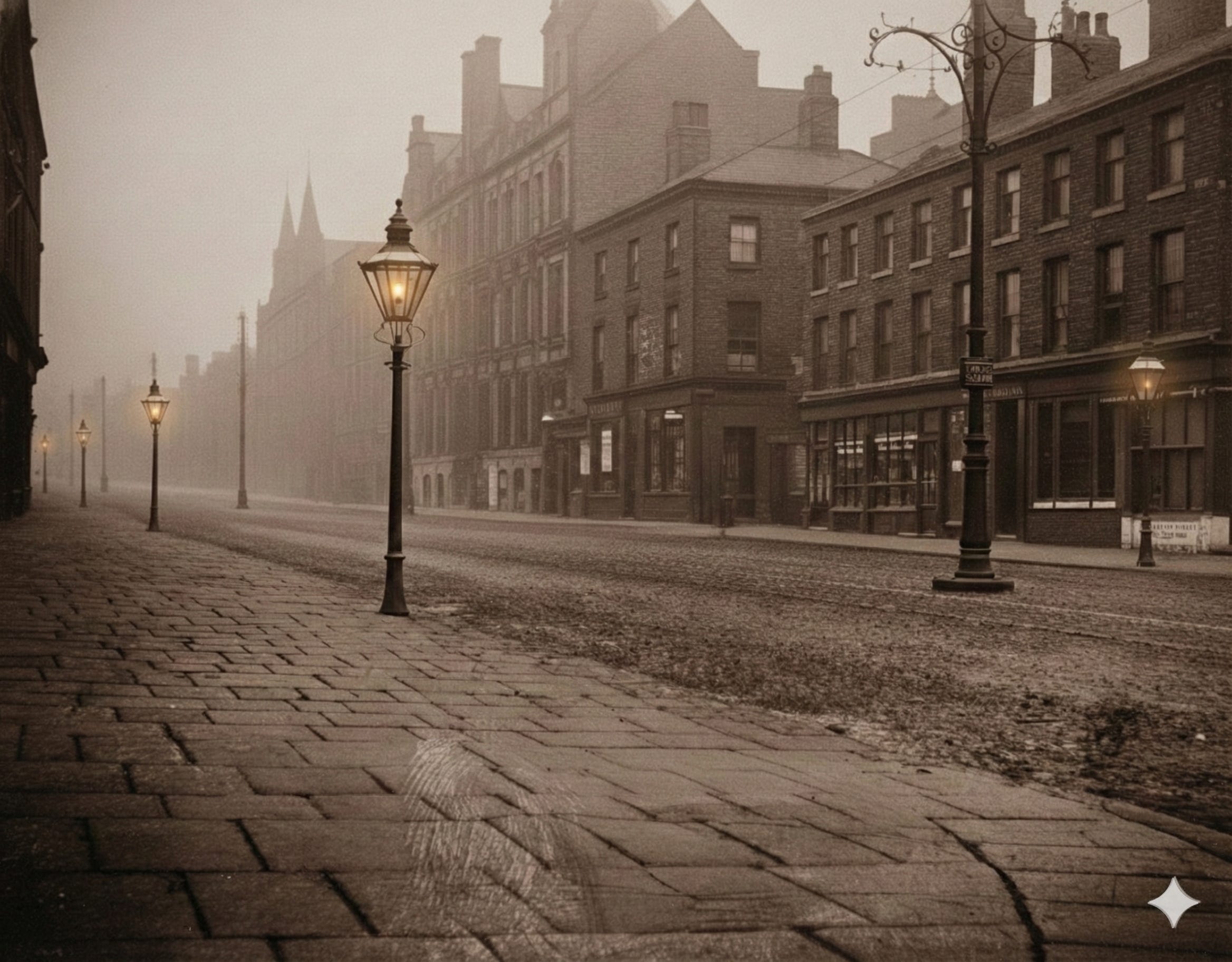
AI-restored view of Chapel Street, c.1900 — cleaned, colour-toned and brought back to life with subtle Edwardian hues, atmospheric fog and fine detail so you can see the street exactly as it would have looked over a century ago.
Long before Payne struck his first flame, Chapel Street had already changed global history.
On 1 January 1806, the Philips & Lee Cotton Twist Mill lit both the mill and a stretch of Chapel Street using manufactured gas — the first permanent gas-lit street in the world, beating London’s Pall Mall by two years. People gathered to stare at “fire suspended in the air”; some were terrified, others awestruck.
By the time Payne came along, Salford had already been glowing for decades — though it rarely gets the credit.
Starting Out: Oil, Wicks, and Endless Walking
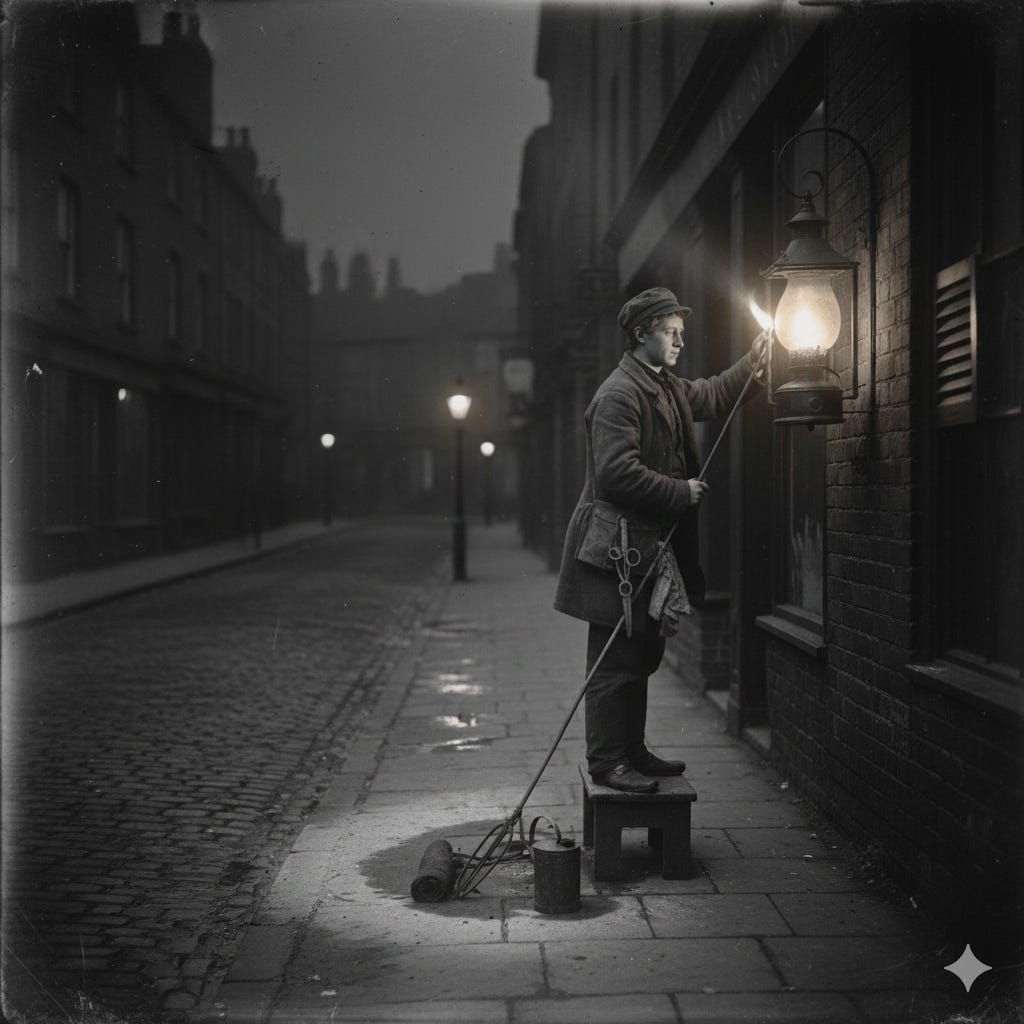
AI re-imagining of young James Payne in the 1830s — lighting Salford’s old oil lamps on Chapel Street, long before gas or electricity. Dim flame, wet cobbles, and miles to walk every night.
Payne began his career under the old Salford Commissioners, before the Corporation existed.
In the 1830s, every lamp he lit burned oil — dim, smoky and unreliable. The routine was brutal:
50–80 lamps per round
10+ miles walking every night
Lighting at dusk, extinguishing at dawn
Cleaning glass, trimming wicks, refilling oil
Fixing broken panes
Fielding complaints if even one lamp failed
This was seven days a week, in all weather. His boots must have memorised every flagstone on Chapel Street.
Gas Arrives — and the City Grows Brighter
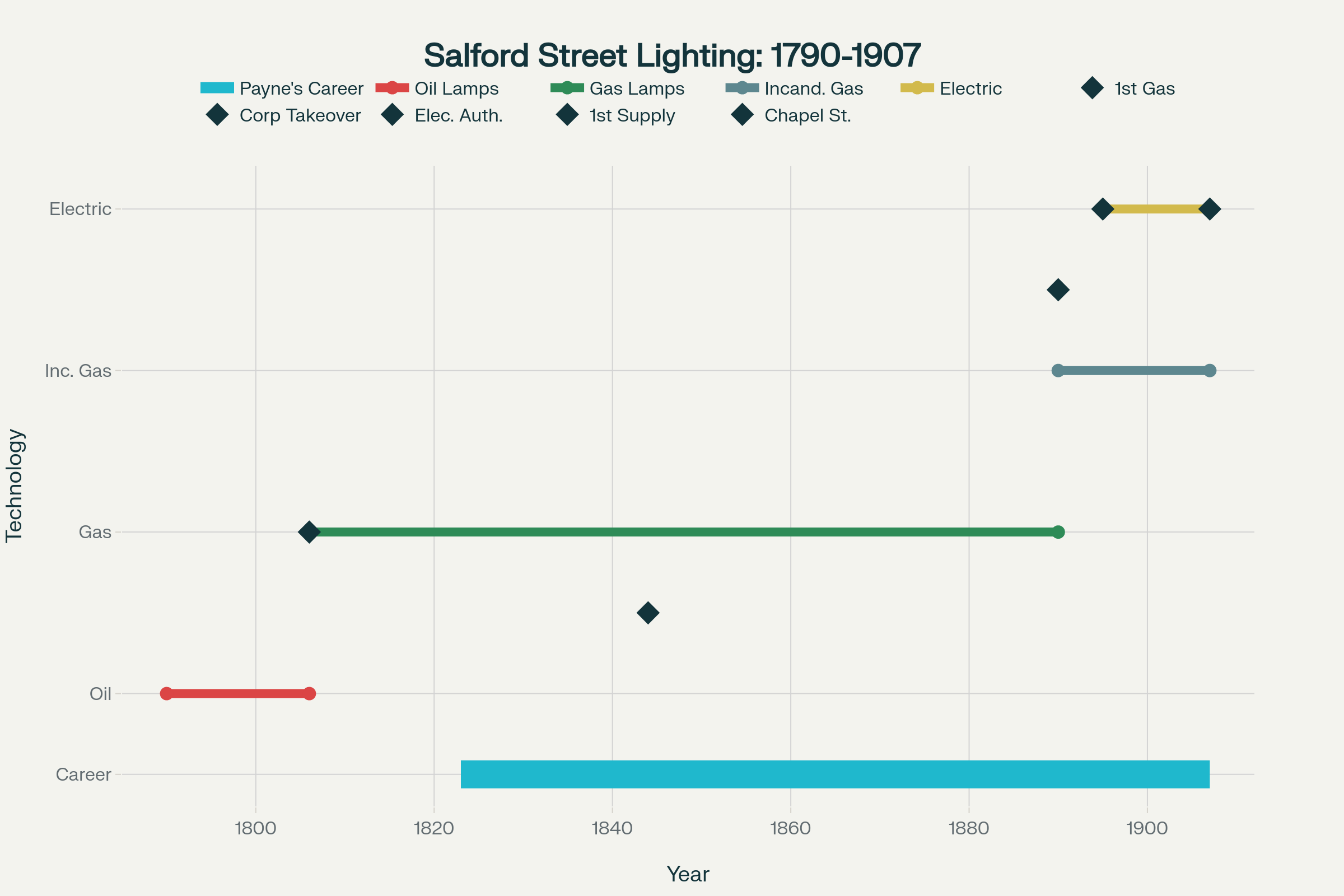
A simple timeline showing how Salford’s street lighting evolved from oil to gas, to incandescent mantles, and finally to electricity — and where James Payne’s 64-year career fits within that transformation. Chapel Street’s 1806 gas-lighting milestone sits right at the start of the modern world.
As Payne grew into his role, Salford began replacing oil with gas lighting — and the city changed overnight.
Gas gave:
a brighter, steadier flame
more reliable light
far easier maintenance
Payne swapped oil cans and wick trimmers for a lamplighter’s pole tipped with a tiny flame to ignite the gas jets inside each lantern.
By mid-century, Salford’s gas network was expanding fast:
Bloom Street Works (1830)
Regent Road (1858)
Liverpool Street (1868)
Albion Street (1893)
West Egerton Street (1912)
Gas was everywhere — and Payne kept it running.
The Incandescent Mantle Revolution
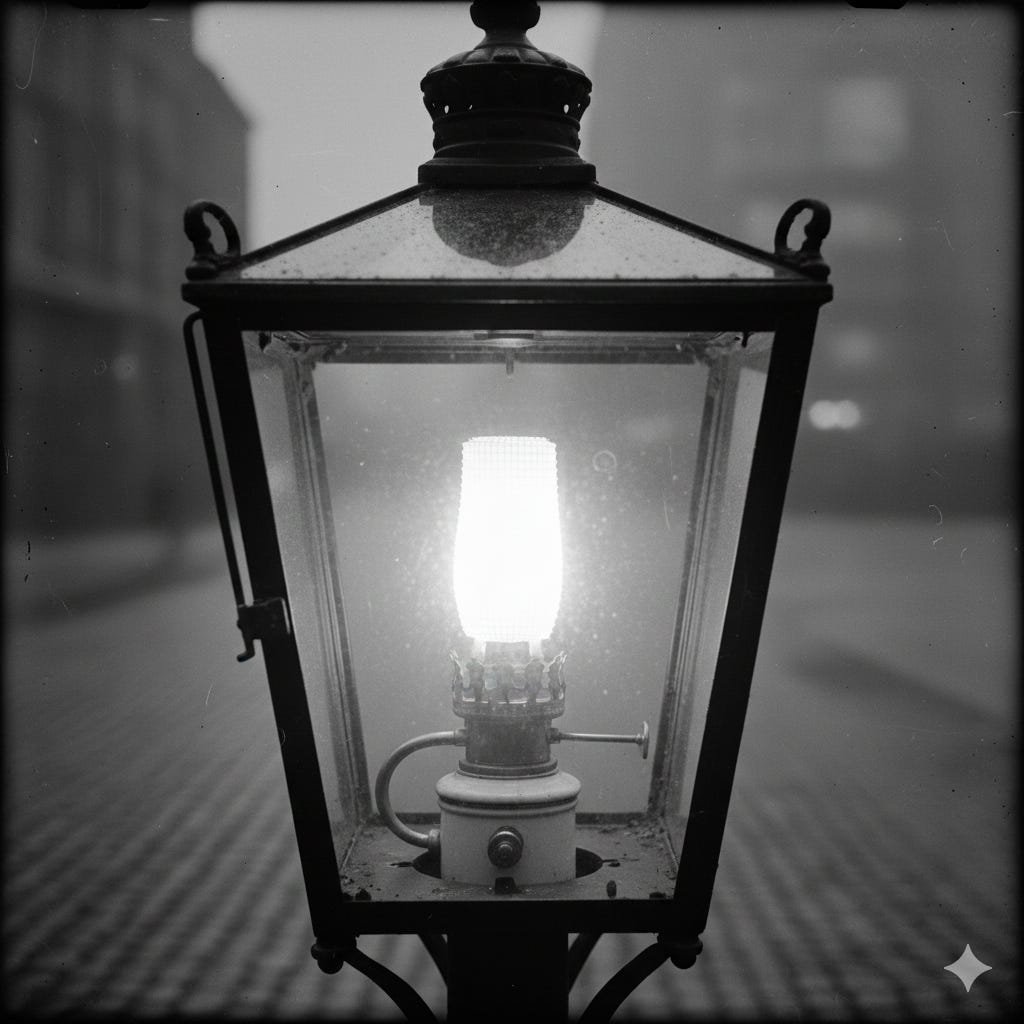
AI re-imagining of an incandescent gas mantle — the brilliant white burner that replaced the old yellow flame and lit Salford’s streets at the end of the 19th century.
In the late nineteenth century, the new incandescent gas mantle changed everything again.
Instead of a soft yellow flame, mantles gave a brilliant white light — far brighter and more efficient.
Payne, now an older man, adapted once more. He learned the new burners, updated his routes, and kept the city luminous through another technological leap.
Electricity Arrives — and Payne Lights It
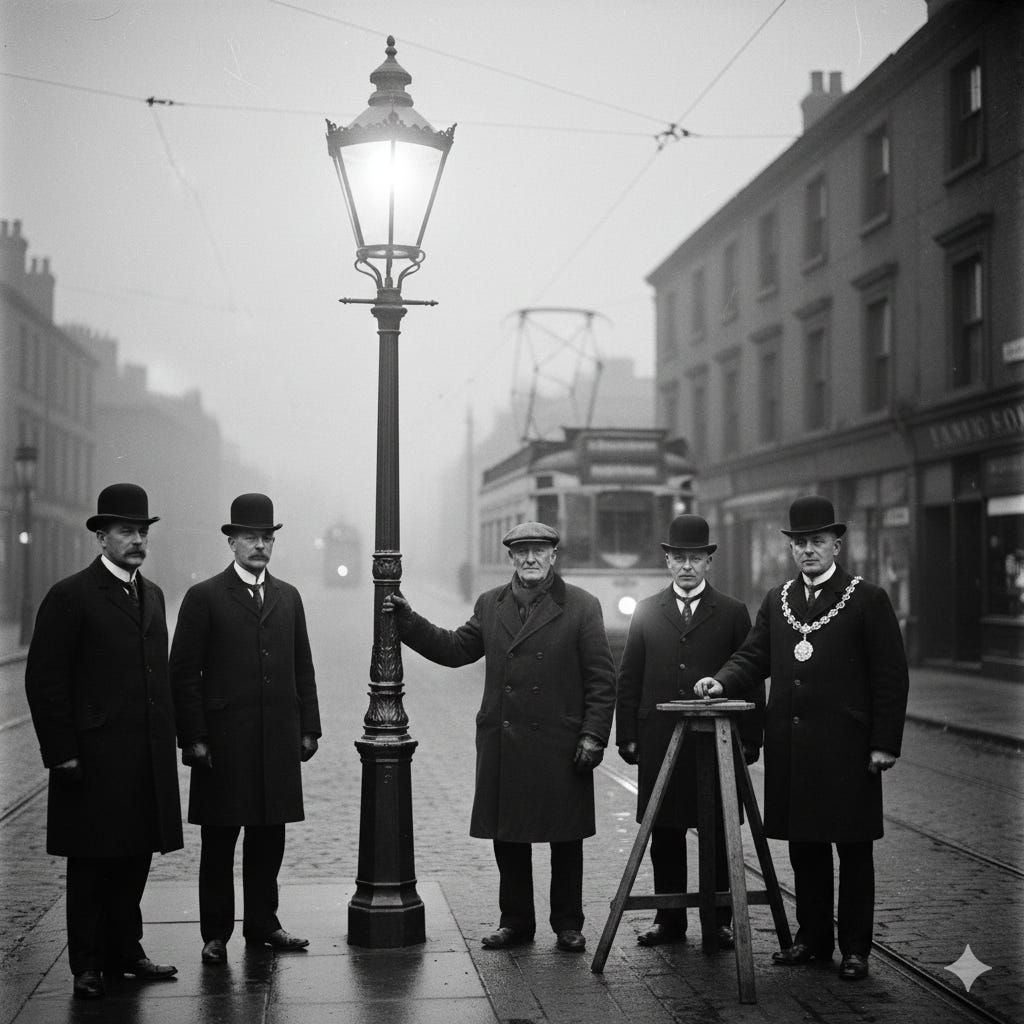
AI re-imagining of James Payne switching on the first electric lamps on Chapel Street in 1907 — the last lamplighter welcoming Salford into the new age of light.
Salford authorised electrical generation in 1890, opened its first station in 1895, and built the huge Frederick Road generating station in the early 1900s.
Electric lighting arrived on Chapel Street soon after.
In a gesture of real civic affection, the Corporation chose James Payne, then 84, to ceremonially switch on the electric lamps on Chapel Street in 1907 — the same street that had first been lit by gas in 1806.
He had lived through the entire century of change. And now he lit the next one.
A Funeral Fit for a Civic Figure
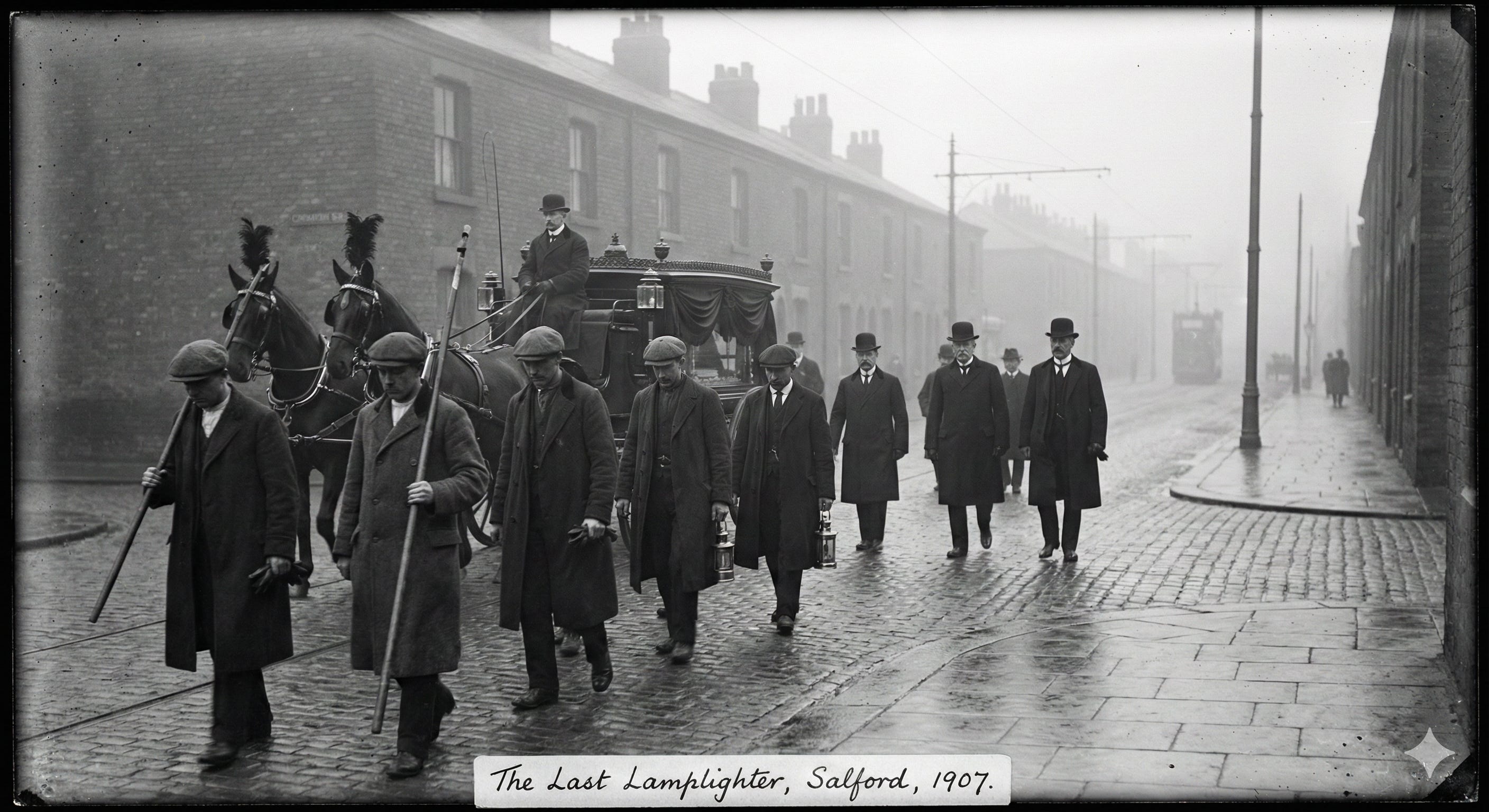
AI re-imagining of the 1907 funeral of James Payne, Salford’s last lamplighter — a quiet procession from Coronation Street to Weaste Cemetery, honouring the man who lit the city for over sixty years.
Later that same year, Payne died at the age of 84.
The entire Lighting Department — around 90 men — attended his funeral. The procession left from his daughter’s house on Coronation Street (the real one) and made its way to Weaste Cemetery. Senior officials walked alongside ordinary lamplighters: a rare moment of respect across ranks.
They weren’t just burying a colleague. They were burying an era.
A Life That Mirrors a City
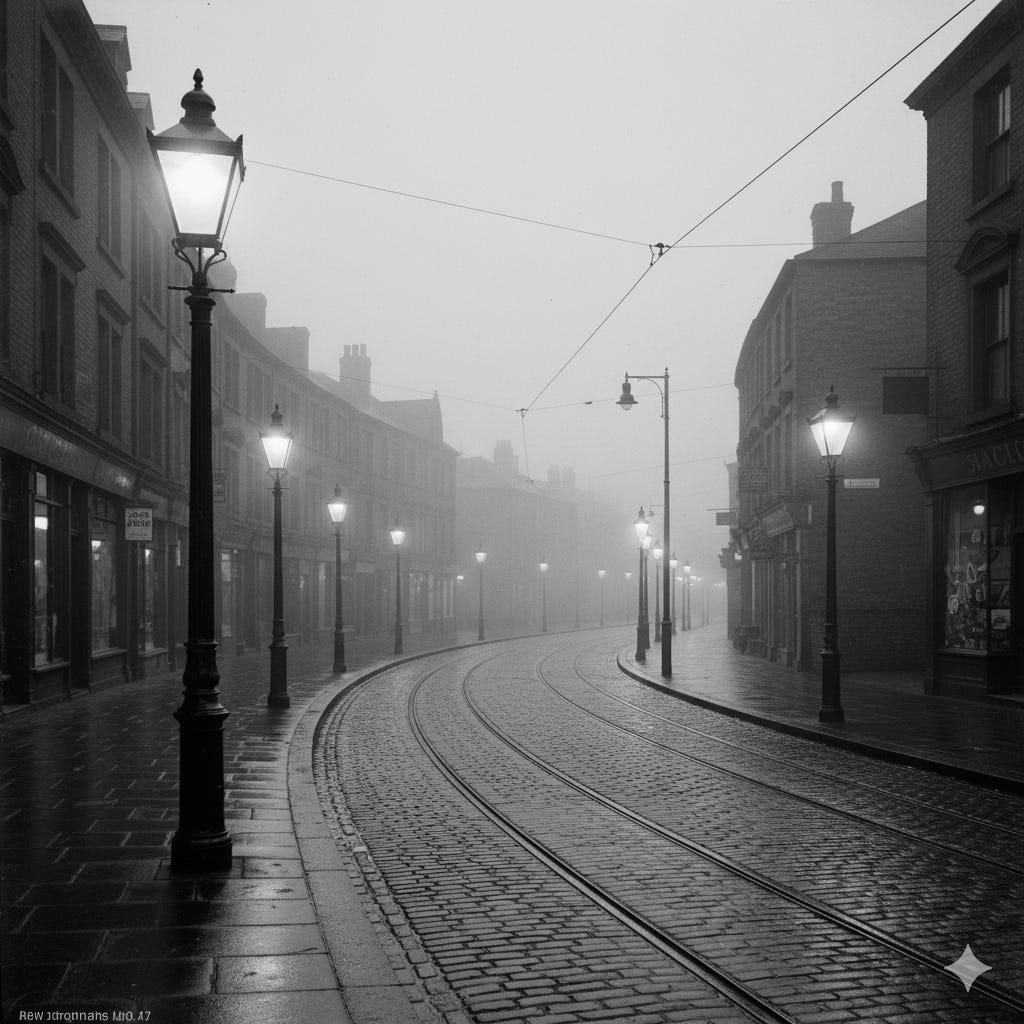
AI re-imagining of Chapel Street crossing from the gas-lit 19th century into the electric 20th — fog, cobbles, tramlines, and the lamps that carried Salford into a new age.
James Payne’s life charts the transformation of Salford itself. He began lighting oil lamps in a grimy, unpaved town — and died in a modern electric city with:
gas grids
incandescent mantles
power stations
electrified trams
and a new vision of the night-time street
He didn’t just witness the change.
He kept the lamps burning through every phase of it.
Payne didn’t record his own life, he didn’t leave memoirs, and he didn’t make speeches — but he did something better.
He lit Chapel Street, night after night, for over sixty years.
And in doing so, he helped carry The Street That Lit the World into the new century.